

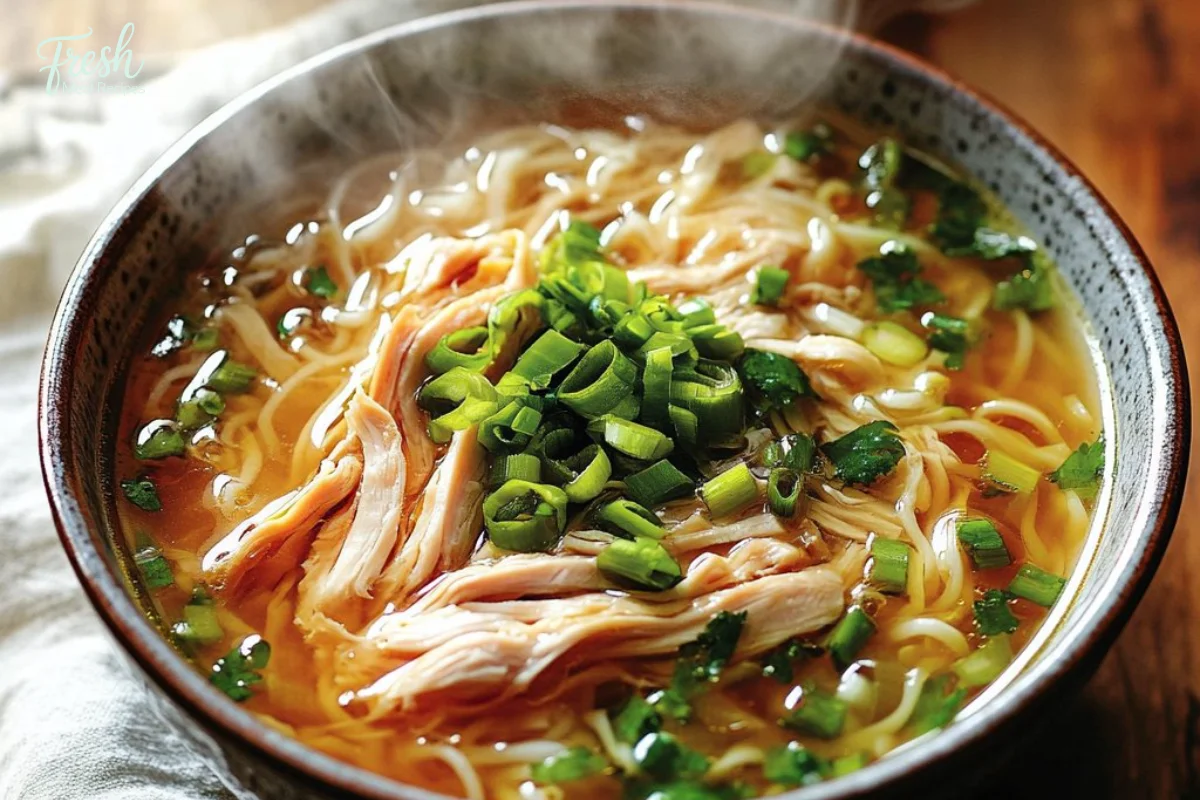
Begin with the soft click of a wooden spoon against a pot and the steady hiss of oil warming on the stove. I often make Classic Ginger Garlic Chicken Noodle Soup on an afternoon when the light feels low and steady, and the house wants something plain and true. The soup is simple to assemble, and it has a way of settling a busy day into something manageable.
If you enjoy easy weeknight dinners that feel intentional, you might also like a quick stir of noodles and veggies I use for busy evenings, which I keep as a regular go-to in my meal rotation: simple stir-fried noodle recipe.
Why Classic Ginger Garlic Chicken Noodle Soup Works So Well Every Time
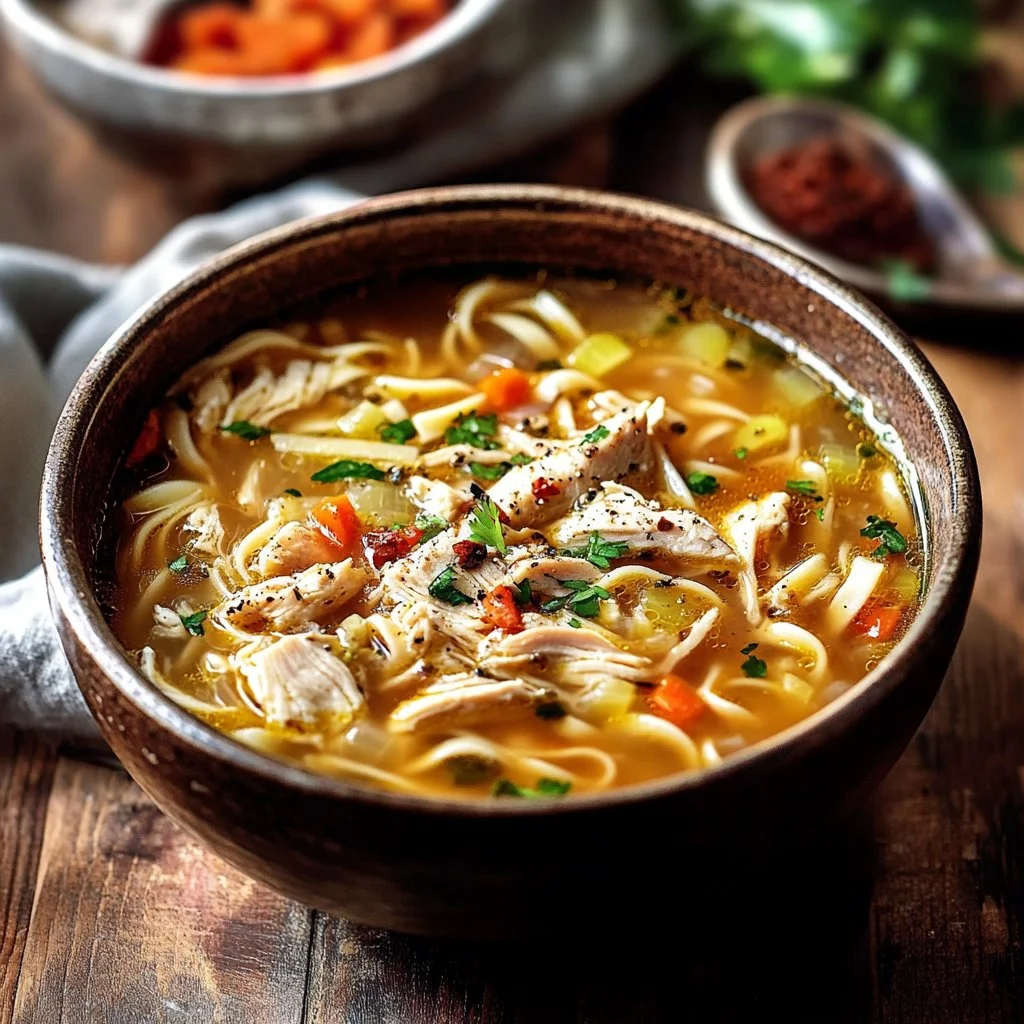
This soup is the kind of recipe that meets you where you are. It asks only for a little attention at the start and then rewards you with warmth and clarity. The ginger and garlic give the broth a gentle lift, while shredded chicken and tender noodles make it filling without feeling heavy.
It works in modern home kitchens because it is forgiving. You can use leftover chicken, a store-bought roast, or quickly poach a breast. Vegetables stay flexible. Noodles adapt to what you have on hand. The result is a dependable dish that supports everyday life instead of complicating it.
I like to think of this soup as part of a calm kitchen routine, much like the quiet satisfaction I take from simple baking tasks. I often pair a light soup with no-fuss desserts or family-friendly desserts when friends stay late. The soup’s ease mirrors the uncomplicated comfort of homemade dessert recipes and easy dessert recipes I make when I want food to be comforting and straightforward.
Why this dish works:
- It balances bright aromatics with soft, familiar textures.
- It accepts swap-outs easily so you can cook with what you have.
- It scales well for a family dinner or for making extra to save.
Bringing Classic Ginger Garlic Chicken Noodle Soup Together Gently
“Good recipes should feel calm, not complicated.”
Start by gathering a few simple elements. The process is direct: build flavor on the stovetop, add broth, bring things together, and finish with tender noodles. The rhythm is steady and reassuring.
Think of the work in three gentle parts. First, build an aromatic base with oil, onion, garlic, and ginger. From there, introduce the liquid and protein. Finally, add noodles and vegetables and let the soup settle into a quiet simmer until everything is tender and cohesive.
This is a recipe that encourages small moments of attention. While the onion softens, notice the change in scent. Meanwhile, when the broth comes to a simmer, the steam carries the first clear notes of ginger. After the noodles have returned to tenderness, the soup will feel balanced and ready.
Gathering the Ingredients
2 tablespoons vegetable oil
1 onion, chopped
3 cloves garlic, minced
1 tablespoon fresh ginger, grated
4 cups chicken broth
2 cups cooked chicken, shredded
1 cup noodles (e.g., egg noodles or rice noodles)
2 cups vegetables (e.g., carrots, celery)
Salt and pepper to taste
Chopped green onions for garnish
A few gentle notes on the ingredients:
- Vegetable oil warms quickly and gives you a neutral base for sautéing. If you prefer, a light olive oil also works.
- A medium onion brings sweetness when it turns translucent. Take the time to let it soften; that quiet step builds flavor.
- Fresh ginger adds a bright, warming note. Grating it releases essential oils that change the broth in a good way.
- Use a good-quality chicken broth for a deeper taste. If you are short on time, a well-priced store brand will do. Homemade broth is lovely when you have it.
- Cooked chicken makes assembly fast. Shred it gently so the pieces fold into the broth easily.
- Choose noodles that match the mood. Egg noodles feel classic; rice noodles sit lighter. Either one will give you the soft bite that makes this soup feel like home.
- Vegetables add color, texture, and substance. Sliced carrots and celery are classic, but tender greens or peas make fine additions.
- Salt and pepper are the finishing touches. Season thoughtfully, tasting as you go.
- Chopped green onions at the end bring a fresh lift and a bit of color.
If you are assembling a small weeknight menu, this soup pairs well with light baking projects. It has the same steady calm as everyday baking or a simple cake recipe you make without fuss. I sometimes serve a modest slice of a plain cake or one of my favorite family-friendly desserts afterward for a gentle finish.
Step-by-Step Directions
- In a large pot, heat vegetable oil over medium heat.
Warm the oil until it moves easily across the bottom.
Watch for a faint shimmer; that tells you it is ready. - Add chopped onion and sauté until translucent.
Stir occasionally so the pieces soften evenly.
Notice the aroma shift as the onion becomes sweet. - Stir in minced garlic and grated ginger, cooking for another minute.
Keep the heat gentle so the garlic does not brown.
Allow the ginger to release its fragrance into the oil. - Pour in chicken broth and bring to a boil.
Increase the heat until small bubbles rise steadily.
From there, reduce to a gentle simmer to settle flavors. - Add cooked chicken, noodles, and vegetables, then simmer until noodles are tender.
Stir so the noodles do not stick and the vegetables cook evenly.
Taste the noodles for doneness; they should be tender but not mushy. - Season with salt and pepper to taste.
Start with a small pinch and add more as needed.
Taste the broth and adjust so it feels balanced. - Serve hot, garnished with chopped green onions.
Ladle into warm bowls and let the steam lift the first scents.
Sit for a moment and enjoy the quiet comfort of a simple meal.
As you follow these steps, look for sensory cues. The steam will carry the scent of ginger; the broth will look clearer as it simmers. If you are also baking or preparing a small dessert, you might notice the batter thickening in another bowl or the gentle setting of edges in a pan. Keep things relaxed. The goal is a steady, pleasing outcome, not fuss.
Serving Classic Ginger Garlic Chicken Noodle Soup Simply
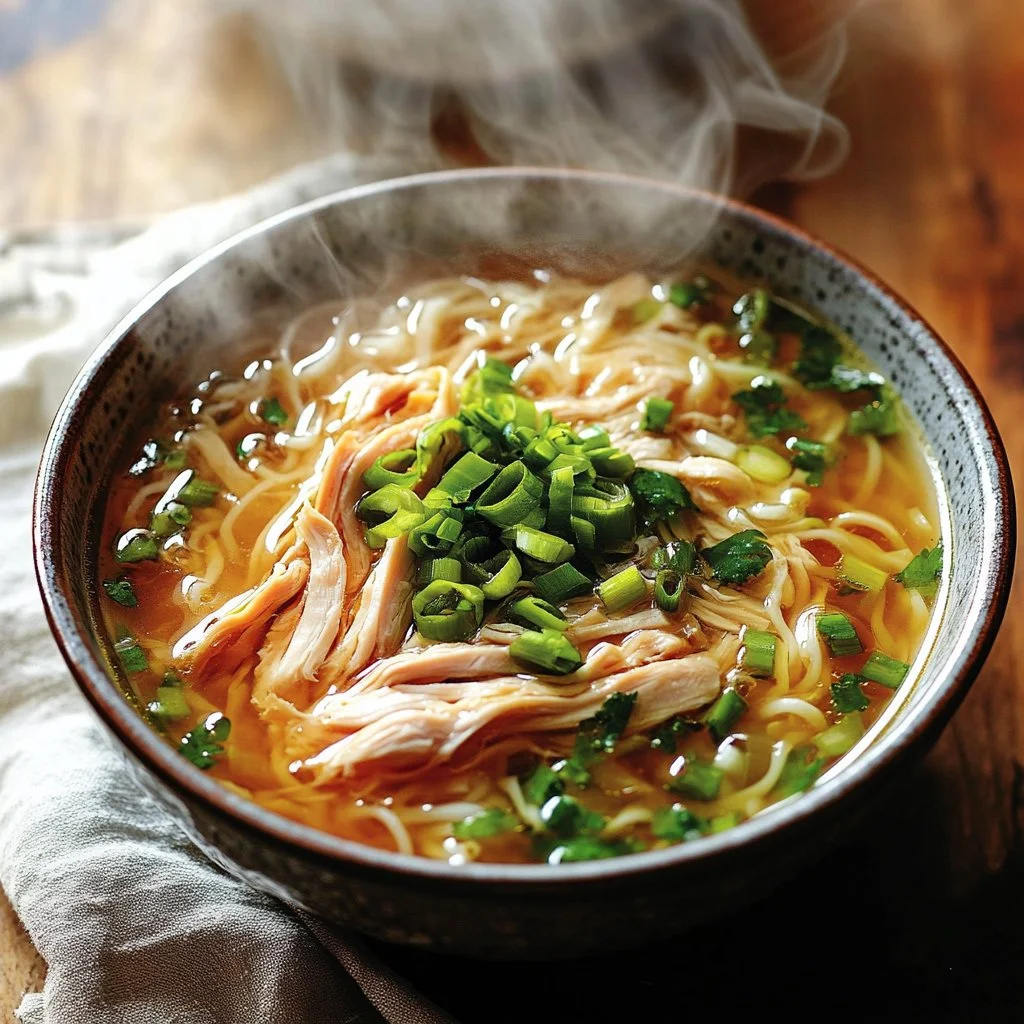
This soup asks for little in terms of presentation. A shallow bowl, a cloth napkin, and a spoon are all you need. Serve it warm, with a small plate of toasted bread or a light salad if you like.
For a casual evening, set bowls on the table and let people help themselves. For a quieter meal, ladle the soup and top with a scattering of green onions. A hot cup of tea or a modest mug of coffee sits nicely alongside the bowl when you want something extra comforting.
If you plan a small menu, the soup makes a gentle first course before a simple baked dessert. It also pairs with sandwiches or a baked side. When guests arrive and evenings feel relaxed, this dish fits right in and keeps the meal unhurried.
For variety, consider serving a small plate of pickled vegetables or thinly sliced radishes. The bright acidity contrasts warmly with the ginger’s heat. And if you want to keep your weeknight dinner rotation lively, you can pair this soup with a hearty pasta or a seasonal vegetable skillet like a favorite weeknight dish: chicken bacon ranch pasta.
Saving Some for Later
Refrigeration:
Let the soup cool to near room temperature before covering.
Store it in an airtight container in the refrigerator for up to four days.
When you reheat, do so gently over low heat until just warmed through.
Freezing:
This soup freezes well if you leave noodles out before freezing.
Freeze the broth and chicken in a container for up to three months.
When ready, thaw in the refrigerator and add fresh noodles as you reheat.
Reheating tips:
Thaw overnight if frozen, then warm the soup slowly on the stove.
Add fresh noodles at the end and simmer until tender.
Adjust seasoning after reheating; salt and pepper may need a small boost.
Make-ahead logic:
You can prepare the broth and shredded chicken in advance and refrigerate them separately.
Assemble the soup the day you plan to eat so the noodles remain perfectly textured.
This approach makes serving effortless on busy nights.
Leftovers often taste better after a short rest. The flavors settle and become more integrated. If you plan to take the soup for lunch, pack the components separately and assemble just before warming. That keeps the noodles from becoming overly soft and the vegetables from losing their bite.
Jessica’s Kitchen Notes
- Pan and pot choice
Use a wide, heavy-bottomed pot for even heat distribution.
A medium-large stockpot gives the soup room to move and the noodles room to expand. - Oven placement and timing for sides
If you bake something small for dessert, place it in the middle of the oven.
Meanwhile, keep an eye on both dishes and set a timer so nothing cooks too long. - Substitutions that work
Use leftover turkey in place of chicken when you have it.
If fresh ginger is not available, a half-teaspoon of ground ginger can stand in, though fresh is preferable. - Texture fixes
If noodles cook too long, add a handful of fresh greens at the end for texture.
If the broth tastes flat, a squeeze of lemon or a dash of soy sauce can bring it to life. - Timing flexibility
This recipe is forgiving. You can let it simmer longer for softer vegetables, or reduce the simmer time to preserve more bite.
If you are juggling other tasks, build the base, step away, and return to finish with noodles.
A few small rituals help keep things calm. I chop veggies early and place them in a small bowl. I grate ginger directly into the pan when I am ready to use it so the aroma is freshest. Little practices like these keep the cooking steady and pleasant.
Simple Variations
Classic swap-outs:
- Use rice noodles for a gluten-free option. They cook faster, so add them last.
- Substitute udon or soba for a heartier texture.
Herb and flavor variations:
- Add a handful of chopped cilantro or parsley at the end for brightness.
- Stir in a splash of toasted sesame oil for a richer finish.
Vegetable adjustments:
- Thinly sliced bok choy or spinach fold in quickly and give the soup a fresh texture.
- Roasted root vegetables add depth when you want a more rustic bowl.
Protein changes:
- Poach a chicken breast in the broth for deeper flavor when you have time.
- Use shredded rotisserie chicken for the fastest version.
Comforting additions:
- A soft-boiled egg on top makes the soup a fuller meal.
- A few drops of chili oil or a pinch of red pepper flakes bring a gentle warmth if you like spice.
These variations are meant to be gentle nudges, not complicated departures. The spirit of the recipe is simple and calm; changes should keep that intention.
Print
Classic Ginger Garlic Chicken Noodle Soup
- Prep Time: 15 minutes
- Cook Time: 30 minutes
- Total Time: 45 minutes
- Yield: 4 servings 1x
- Category: Soup
- Method: Stovetop
- Cuisine: Asian
- Diet: Gluten-Free Option
Description
A comforting and forgiving chicken noodle soup with ginger and garlic that warms the soul.
Ingredients
- 2 tablespoons vegetable oil
- 1 onion, chopped
- 3 cloves garlic, minced
- 1 tablespoon fresh ginger, grated
- 4 cups chicken broth
- 2 cups cooked chicken, shredded
- 1 cup noodles (egg noodles or rice noodles)
- 2 cups vegetables (carrots, celery)
- Salt and pepper to taste
- Chopped green onions for garnish
Instructions
- In a large pot, heat vegetable oil over medium heat.
- Add chopped onion and sauté until translucent.
- Stir in minced garlic and grated ginger, cooking for another minute.
- Pour in chicken broth and bring to a boil.
- Add cooked chicken, noodles, and vegetables, then simmer until noodles are tender.
- Season with salt and pepper to taste.
- Serve hot, garnished with chopped green onions.
Notes
For variations, use leftover turkey in place of chicken or add a soft-boiled egg on top for a fuller meal.
Nutrition
- Serving Size: 1 bowl
- Calories: 350
- Sugar: 5g
- Sodium: 600mg
- Fat: 12g
- Saturated Fat: 1g
- Unsaturated Fat: 8g
- Trans Fat: 0g
- Carbohydrates: 45g
- Fiber: 3g
- Protein: 20g
- Cholesterol: 50mg
FAQs About Classic Ginger Garlic Chicken Noodle Soup
Can I make this ahead of time?
Yes. This recipe is forgiving. Making it ahead often makes serving easier and lets the flavors settle naturally. Store components separately if possible and add the noodles just before serving.
How long will the soup keep in the refrigerator?
Stored in an airtight container, the soup stays good for up to four days. For best texture, keep noodles separate when possible.
Can I use leftover cooked chicken?
Absolutely. Leftover chicken is a perfect shortcut. Shred it gently and fold it in during the last simmer so it warms without overcooking.
What if I only have powdered ginger?
Powdered ginger can work in a pinch. Use about one third of the fresh amount given, and taste as you go. Fresh ginger will give a brighter, fresher note.
How do I prevent noodles from getting mushy?
Cook noodles separately when you plan to store leftovers, or add dry noodles to the pot shortly before serving. This keeps texture crisp and pleasant.
These answers come from practical kitchen experience. I prepare variations of this soup often and have learned which small steps protect texture and flavor.
A Final Thought From My Kitchen
This soup is a quiet kindness you can give yourself or someone else. It asks for small, considered steps and gives back a warm, steady bowl that feels like care. The work is gentle and the result is honest.
There is a calm confidence that comes with recipes you return to again and again. As you make this soup, trust the rhythm of cooking. Notice the small changes: the onion softening, the ginger’s scent rising, the noodles sliding to tenderness. Those moments are the point.
You can keep things simple. You can add small flourishes when you have time. Either way, this recipe supports an unhurried kitchen practice that leaves you feeling capable and quietly inspired.
Conclusion
For another take on ginger-forward chicken noodle soups with a focus on gluten-free options, I find useful ideas and adaptations in the Ginger Chicken Noodle Soup (Gluten Free!) • One Lovely Life article.
