

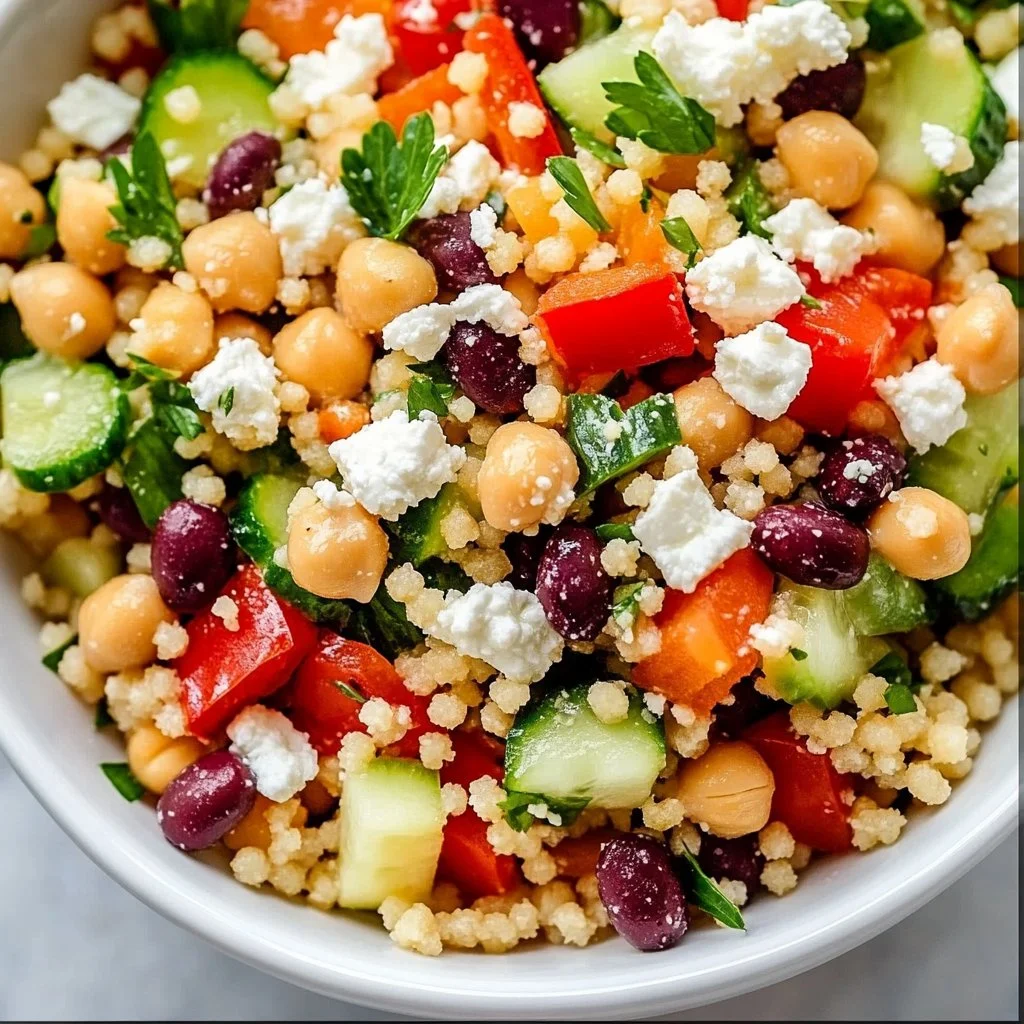
A late-afternoon light filters through the kitchen window as I pull a simple bowl from the cabinet. I think of fresh herbs, a lemon’s bright scent, and the steady little steam that rises when boiling water meets tiny grains. This is the quiet moment I love the one that leads to a Healthy Mediterranean Couscous Salad that feels both easy and intentional. It settles on the table with calm confidence, welcome at a weeknight meal or as part of a small, informal gathering. If you want a companion dish that is just as gentle to prepare, try the chickpea, feta and avocado salad recipe for another reliable, everyday favorite.
Why Healthy Mediterranean Couscous Salad Works So Well Every Time
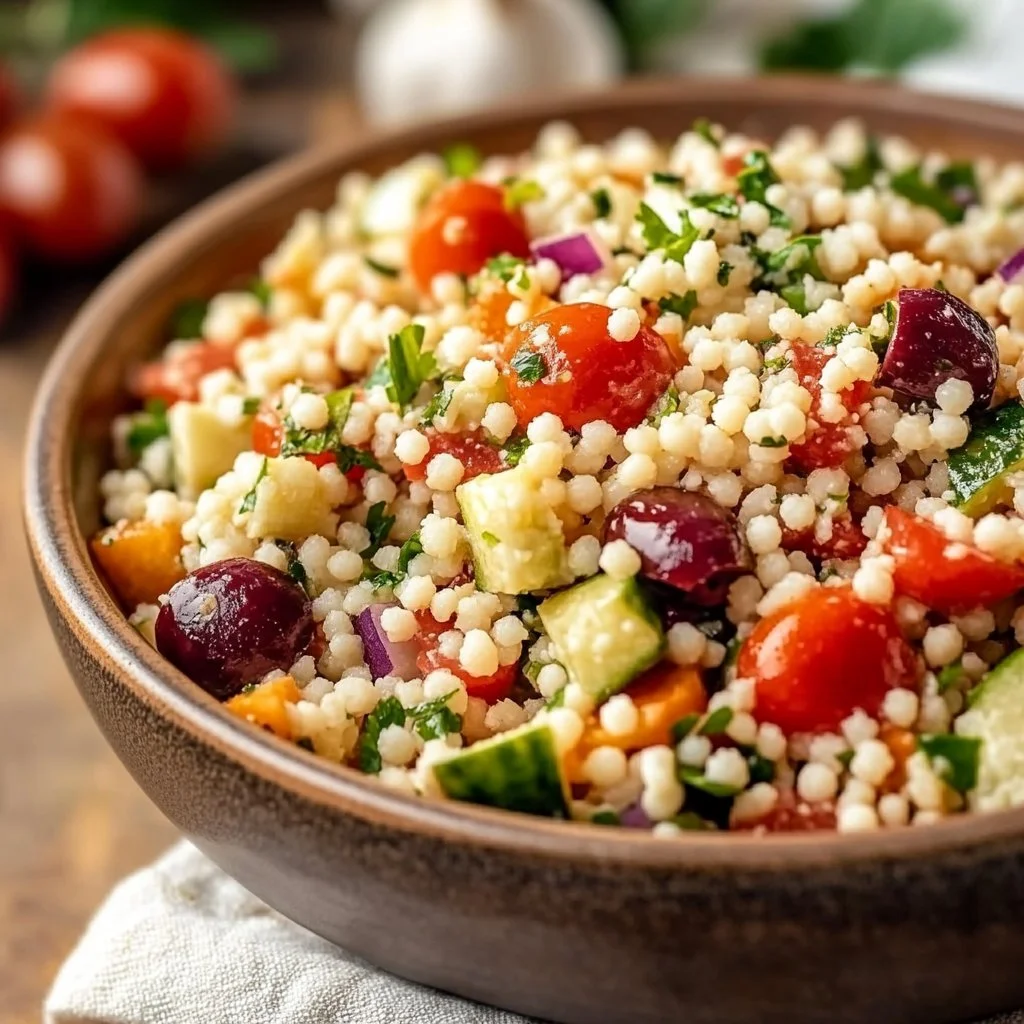
This salad is the kind of recipe that earns a place in your regular rotation because it is consistent and forgiving. It uses couscous, a grain that cooks quickly and holds dressing and texture without fuss. The vegetables add freshness and snap, the olives and feta bring savory depth, and the lemon-olive oil dressing ties everything together with a bright ease.
I have relied on similar bowls for many years when I want food that feels nourishing without drama. The textures balance: tender couscous, crisp cucumber, soft tomato, and briny olives. That variety makes the dish satisfy a range of appetites and moods. It is also adaptable. Swap herbs, add a bean, or roast the pepper if you want a deeper flavor. These small shifts keep the recipe useful across seasons and schedules.
This salad supports practical modern cooking. It stores well, travels easily, and pairs with many mains. From weeknight dinners to casual potlucks, it is a quiet, steady helper in the kitchen.
Bringing Healthy Mediterranean Couscous Salad Together Gently
“Good recipes should feel calm, not complicated.”
Before you chop or measure, take a moment to picture the textures and timing. The couscous steams quickly and fluffs into light grains. Meanwhile, the vegetables are easy to dice and toss. The dressing comes together in a single bowl and coats the salad without overpowering it.
This is a recipe about rhythm, not speed. Once the water hits the couscous, you pause and let it rest. While it absorbs, you assemble the vegetables. Then you fold everything together and let the flavors settle. The steady pace ensures results that feel intentional and reliable.
The process also teaches a simple truth of home cooking. Little attentions fluffing properly, salting judiciously, cutting vegetables into uniform bits change a good salad into a quietly excellent one. From there, serving becomes a small, calm celebration of sensible technique.
What You’ll Need to Make Healthy Mediterranean Couscous Salad
- 1 cup couscous
Couscous is quick and forgiving. Measure it dry, and know that it will plump when it meets boiling water. - 1 1/4 cups boiling water
Use freshly boiled water for steady absorption. A gentle simmer will not do here; the heat helps grains bloom. - 1 cup cherry tomatoes, halved
Cherry tomatoes give a sweet pop and keep their shape. Halving them keeps the salad from becoming watery. - 1 cucumber, diced
Choose a firm cucumber and remove large seeds if they are watery. Dice uniformly for pleasant texture in every bite. - 1 bell pepper, diced
Use any color you enjoy. Red and orange peppers add sweetness; green peppers add a greener snap. - 1/2 red onion, finely chopped
Thin, fine cuts spread more evenly. If raw onion feels strong, soak the chopped pieces in cold water for a few minutes and drain. - 1/2 cup kalamata olives, pitted and sliced
Olives bring salt and umami. Slice them so they mingle more easily with couscous. - 1/4 cup feta cheese, crumbled
Feta adds creaminess and tang. Use a block-style feta and crumble by hand for better texture. - 1/4 cup fresh parsley, chopped
Fresh herbs brighten the dish. Parsley is mild and universal; you can swap mint or basil if you like. - 2 tablespoons olive oil
A good extra virgin olive oil lifts the dressing and carries flavor. - 1 tablespoon lemon juice
Fresh lemon juice keeps the dressing lively. Bottled will work in a pinch, but fresh is cleaner and brighter. - Salt and pepper to taste
Salt enhances the natural flavors. Taste as you go and adjust gently.
Each ingredient plays a clear role. The couscous is the body. The vegetables offer texture and color. Olives and feta carry savory notes, and the lemon-olive oil dressing balances everything. Understanding these roles makes simple swaps feel safe and sensible.
Step-by-Step Directions
- In a bowl, place couscous and pour boiling water over it.
Cover and let it steam for about 5 minutes until water is absorbed.
Fluff with a fork. - In a large mixing bowl, combine the cooked couscous, cherry tomatoes, cucumber, bell pepper, red onion, olives, feta cheese, and parsley.
Toss gently to distribute the ingredients so every forkful will have contrast. - In a small bowl, whisk together olive oil, lemon juice, salt, and pepper.
Adjust seasoning as needed; the dressing should feel bright and balanced. - Pour the dressing over the salad and toss to combine.
Let the dressing coat the grains and vegetables evenly so flavors meld. - Serve chilled or at room temperature.
Allow a short rest so flavors settle, or bring from fridge to countertop before serving.
These steps are simple by design. The cues to watch for are gentle: the couscous should look plumed and dry to the touch after steaming, vegetables should feel crisp and bright, and the dressing should sit lightly on the ingredients without pooling. If you choose to roast the bell pepper, expect the skin to blister and edges to darken; that adds a smoky note and changes the dish in a pleasing way.
Bringing Healthy Mediterranean Couscous Salad to the Table
Serve this salad without fanfare. Use a wide shallow bowl so the salad looks inviting and easy to serve. A wooden spoon or pair of salad servers will feel warm and approachable in your hands. If you are pouring a little more olive oil on top or adding a few extra crumbles of feta, do it with the same quiet confidence you used while assembling the dish.
This salad pairs beautifully with simple proteins: grilled fish, roasted chicken, or a bowl of stewed beans. It also complements small, everyday desserts later in the meal. Think of it as part of a gentle rhythm: a light salad, a modest main, and a no-fuss dessert to finish. The result feels complete without being overstated.
If you are serving guests, bring the bowl to the table and let people help themselves. It is a relaxed, elegant dish that suits both weekday dinners and casual gatherings. A pot of tea or a small pour of coffee afterward will sit well beside a simple dessert, like an easy dessert recipe or a simple cake recipe you might keep on hand.
How to Store Healthy Mediterranean Couscous Salad
This salad is forgiving when it comes to storage. If you plan to keep it for a day or two, store it in an airtight container in the refrigerator. The flavors often deepen after resting; the lemon and olive oil marry with the couscous and vegetables, making the salad more cohesive.
If you expect leftovers, avoid adding the dressing until closer to serving time the next day. That helps preserve crispness. But if your primary goal is convenience, dress it and refrigerate. Let the salad sit at room temperature for 10 to 20 minutes before serving to bring aromas back to life.
Freezing is not recommended. The cucumber and tomato will lose their texture and become mushy. For make-ahead planning, assemble the dry components in a container, and keep the dressing separate. When you are ready, combine them and enjoy the fresh quality.
Cooling cues matter here. If you have warmed couscous or roasted vegetables, let them cool to near room temperature before adding delicate herbs or crumbled feta. That protects the texture of those ingredients and keeps the salad vibrant.
Small Tips That Make Cooking Easier
- Use a fine fork to fluff the couscous.
It lifts grains without crushing them and helps steam escape evenly. - Choose bowls that fit the task.
A large bowl for tossing and a small bowl for dressing will make assembly calm and tidy. - Taste as you go.
Season lightly, then adjust. Salt and acid change with temperature and time. - If onion feels strong, soak briefly.
Soaking chopped red onion in cold water for a few minutes reduces sharpness without losing crunch. - Roast the pepper if you want depth.
Place a halved pepper cut-side down on a sheet pan and roast at 425°F until edges blister and skin blackens lightly. Cool, peel, and chop.
These are practical nudges rather than hard rules. They reflect a few decades of quiet kitchen work where small adjustments saved effort and improved results. They help you get consistent outcomes without stress.
For more ideas on composing a short menu around this salad, see the fresh healthy meals collection to inspire simple combinations and balanced plates.
Simple Variations
- Add a can of drained chickpeas for extra protein and a creamy lift.
Chickpeas make the dish heartier and stretch it into a light main for one. - Swap parsley for fresh mint and a touch of ground cumin.
Mint lightens the salad and gives a Mediterranean lift that is especially nice in warm weather. - Use roasted bell pepper and a splash of red wine vinegar.
This variation adds a smoky-sweet edge that pairs well with grilled proteins. - Stir in toasted pine nuts or slivered almonds for crunch.
Nuts give toasted warmth and a satisfying bite without making the salad heavy. - Make it grain-free by using tiny cooked quinoa in place of couscous.
Quinoa changes the mouthfeel and adds a nutty dimension while keeping the salad bright.
Each adjustment is small and straightforward. The aim is to make the recipe reflect what you have on hand, not to complicate it. These changes keep the salad approachable and adaptable to different tastes and pantry contents.
Print
Healthy Mediterranean Couscous Salad
- Prep Time: 10 minutes
- Cook Time: 5 minutes
- Total Time: 15 minutes
- Yield: 4 servings 1x
- Category: Salad
- Method: No-Cook / Stovetop
- Cuisine: Mediterranean
- Diet: Vegetarian
Description
A light and refreshing couscous salad with fresh vegetables, olives, and feta, dressed with a lemon-olive oil vinaigrette.
Ingredients
- 1 cup couscous
- 1 1/4 cups boiling water
- 1 cup cherry tomatoes, halved
- 1 cucumber, diced
- 1 bell pepper, diced
- 1/2 red onion, finely chopped
- 1/2 cup kalamata olives, pitted and sliced
- 1/4 cup feta cheese, crumbled
- 1/4 cup fresh parsley, chopped
- 2 tablespoons olive oil
- 1 tablespoon lemon juice
- Salt and pepper to taste
Instructions
- In a bowl, place couscous and pour boiling water over it. Cover and let it steam for about 5 minutes until water is absorbed. Fluff with a fork.
- In a large mixing bowl, combine the cooked couscous, cherry tomatoes, cucumber, bell pepper, red onion, olives, feta cheese, and parsley. Toss gently to distribute the ingredients.
- In a small bowl, whisk together olive oil, lemon juice, salt, and pepper. Adjust seasoning as needed.
- Pour the dressing over the salad and toss to combine, letting it sit for a short time to meld flavors.
- Serve chilled or at room temperature.
Notes
This salad is even better when made ahead, allowing the flavors to develop. Store in an airtight container and dress just before serving for maximum freshness.
Nutrition
- Serving Size: 1 serving
- Calories: 250
- Sugar: 3g
- Sodium: 600mg
- Fat: 14g
- Saturated Fat: 4g
- Unsaturated Fat: 10g
- Trans Fat: 0g
- Carbohydrates: 30g
- Fiber: 5g
- Protein: 8g
- Cholesterol: 15mg
FAQs About Healthy Mediterranean Couscous Salad
Can I make this ahead of time?
Yes. This recipe is forgiving. Making it ahead often makes serving easier and lets the flavors settle naturally. If you want maximum crispness, hold the dressing and add it shortly before serving.
Is couscous the same as pasta?
Couscous is a tiny pasta, technically, but it behaves differently. It absorbs water quickly and fluffily and benefits from steaming rather than long boiling. Treat it as a quick grain that sets a light base for the salad.
Can I substitute another grain?
Certainly. Small grains like Israeli (pearl) couscous, quinoa, or bulgur will work with slight adjustments to cooking time and water ratio. If switching, cook per the grain’s directions and let it cool before mixing.
My salad seems dry. What should I do?
Add a touch more olive oil and a squeeze of lemon. Toss gently and let it rest for a few minutes so the dressing can permeate the grains. Taste and adjust salt if necessary.
A Final Thought From My Kitchen
Good cooking is often a quiet practice. It is the small steps taken without rush, the sensory cues that guide decisions, and the confidence that comes from repetition. Healthy Mediterranean Couscous Salad is a recipe that rewards gentle attention. It does not require perfect ingredients or exact timing. It asks for simple care boiling water, a careful chop, a patient toss and returns comfort and clarity.
If you are new to making salads like this, start with the basic recipe. Notice how the couscous absorbs the dressing overnight, how the parsley lifts each bite, and how a touch more lemon brightens everything. These are small discoveries that build intuition. Over time you will recognize when to add a pinch more salt or when to swap an herb. That quiet confidence makes the kitchen a place of steady nourishment.
Conclusion
If you want a deeper look at couscous techniques and another perspective on Mediterranean flavors, a reliable resource is the Mediterranean couscous recipe from The Mediterranean Dish. It offers practical notes that complement this salad and can expand the ways you use couscous in simple, everyday meals.