

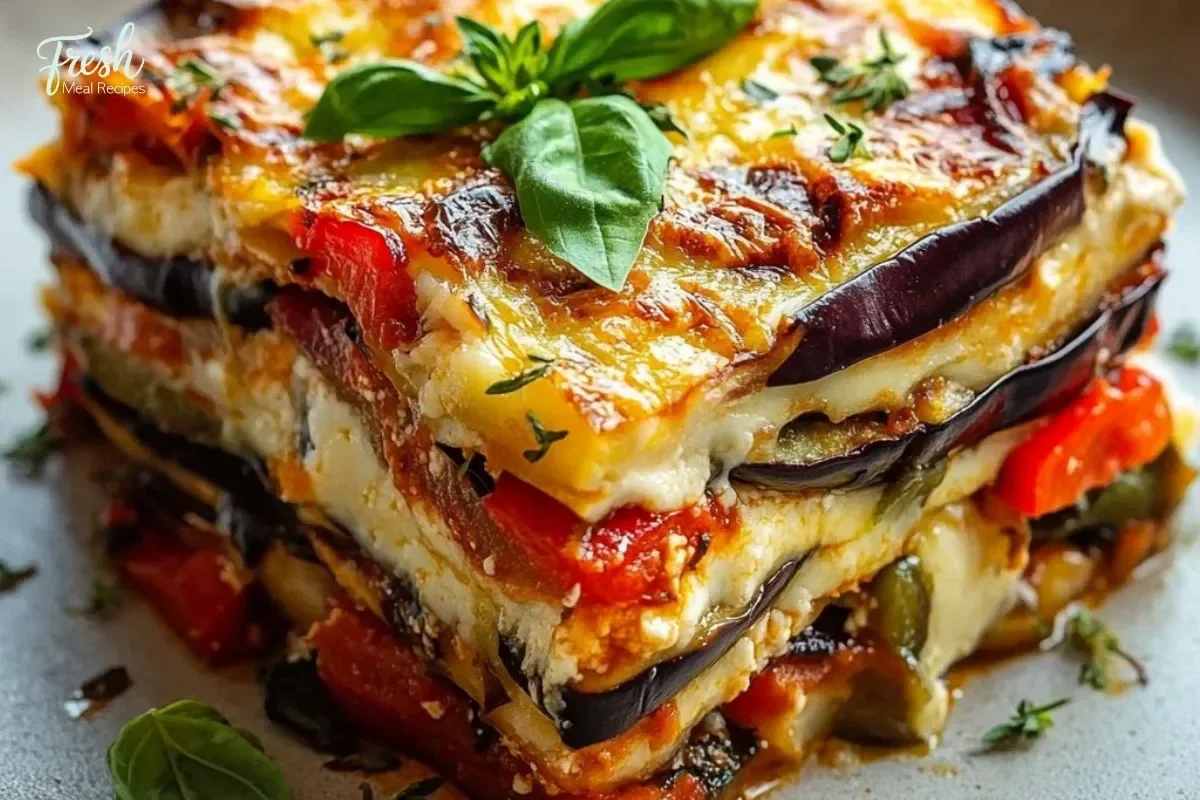
I stand at the counter with a warm towel under my hands, a quiet timer set, and a simple plan: make a Layered Mediterranean Vegetable Lasagna with Creamy Ricotta that will feed the table and ease the evening. The vegetables will roast slowly, the kitchen will smell gently of garlic and basil, and the act of layering will feel calm and precise. This is a recipe that asks for thoughtful steps, not hurry, and it gives you back steadiness and good flavor. If you like easy weeknight meals that still feel special, this one will reward you.
Why Layered Mediterranean Vegetable Lasagna with Creamy Ricotta Works So Well Every Time
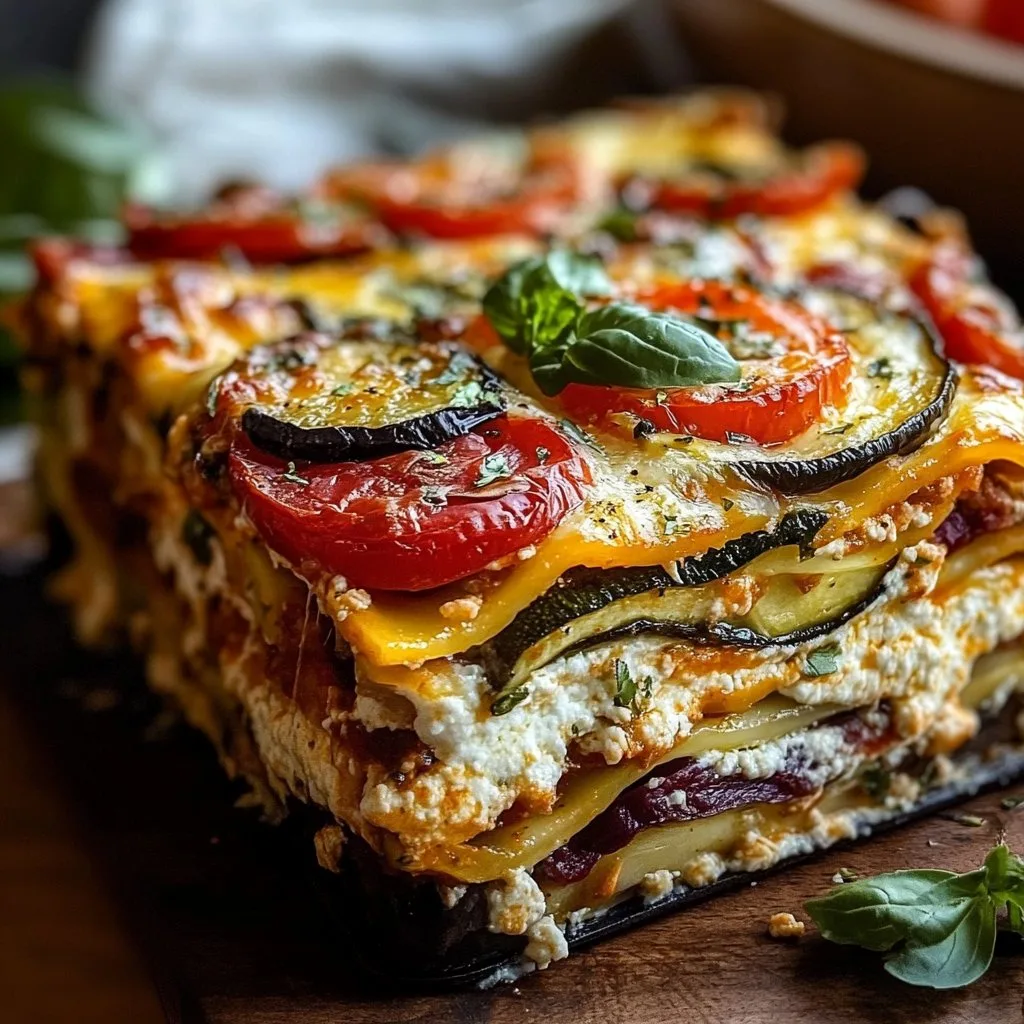
This lasagna fits into modern home cooking because it is forgiving, honest, and steady. The vegetables hold their shape after roasting, the ricotta lends a cool creaminess that steadies the whole dish, and the marinara gives a familiar, warm anchor. It is the kind of recipe you can come back to with confidence.
The layered build is predictable and practical. Each component has a clear role: roasted vegetables for texture, ricotta for silk and support, cheeses for glue and finish, and noodles for structure. Together they create a dish that slices well and warms through evenly. Meanwhile, the timing is simple: roast, boil, layer, and bake. You can fit steps into a busy afternoon and trust the oven to do the rest.
This is also adaptable. If you are pairing with a simple salad or a loaf of crusty bread, the lasagna steps aside and lets the rest of the meal breathe. It feels like everyday baking in the savory sense: reliable, calm, and kind to the cook. If you enjoy recipes that are steady and satisfying, this one will be a quiet favorite in your rotation. For a lighter accompaniment or to round out a small gathering, try a bright salad or a bowl of olives and lemon-dressed greens.
Bringing Layered Mediterranean Vegetable Lasagna with Creamy Ricotta Together Gently
“Good recipes should feel calm, not complicated.”
Before you begin, take a moment to gather the rhythm: roasting gives slow caramel notes, mixing the ricotta brings a quiet, herb-scented cream, and the oven will finish with a mellow, golden top. The process is simple and flows in clear phases. Once the vegetables are turning tender and slightly charred, the rest of the steps fall into place.
Think about texture as you work. Roasted eggplant and zucchini should be tender but not collapsing, bell peppers should show some char, and the ricotta mix should be smooth and fragrant. From there, layering becomes a steady, almost meditative process. After the lasagna has baked and rested, the layers settle and the dish becomes easier to slice cleanly. This is a recipe that rewards patience and a gentle hand.
For readers who like a little structure in the kitchen, there are connections to other simple meals I rely on. If you enjoy a balanced skillet or a morning toast with bright toppings, this lasagna will sit comfortably beside them on your menu. A simple chicken and vegetable skillet is an easy companion on busier nights, and both share the same quiet approach to flavor and timing.
What You’ll Need to Make Layered Mediterranean Vegetable Lasagna with Creamy Ricotta
1 large eggplant, sliced into 1/4-inch rounds
2 medium zucchinis, sliced lengthwise into 1/4-inch strips
1 red bell pepper, halved and seeded
1 yellow bell pepper, halved and seeded
Olive oil, for brushing
Salt and pepper, to taste
9 lasagna noodles
1 cup ricotta cheese
1 cup mozzarella cheese, shredded
1 cup parmesan cheese, grated
2 cloves garlic, minced
1 teaspoon dried oregano
1 teaspoon dried basil
2 cups marinara sauce
Fresh basil leaves, for garnish
Notes on ingredients and purpose:
- Eggplant provides a soft, meaty texture when roasted. Choose firm bulbs with glossy skin for the best result.
- Zucchini adds a mild, tender note and keeps the layers from feeling too heavy. Slice evenly for consistent roasting.
- Bell peppers bring a bright, sweet contrast and a little char when roasted. Their color makes the finished dish inviting.
- Olive oil is your best friend here; a light brush helps vegetables caramelize and prevents sticking.
- Ricotta is the structural cream. Full-fat ricotta gives a silkier mouthfeel and holds up well under heat.
- Mozzarella and parmesan pair for melt and savory depth. Mozzarella gives stretch, parmesan gives sharpness.
- Garlic and dried herbs are small but essential. They flavor the ricotta without adding extra steps.
- Marinara acts as both moisture and flavor anchor. A good-quality sauce makes an honest difference.
- Fresh basil at the end brightens each slice and gives the lasagna a clean finish.
A quick note on broader kitchen practices: the kind of steady preparation you use with this lasagna translates to other meals. If you often make quick toasts with avocado or a warming quinoa bowl, these techniques of seasoning and timing will feel familiar. For a morning dish, I like to lean on a bright, herbed toast like pesto avocado toast with eggs for simplicity. Those same small choices fresh herbs, good oil, balanced salt lift everything.
Step-by-Step Directions
- Preheat your oven to 400°F (200°C). Line a baking sheet with parchment paper.
Arrange your workspace so the vegetables are ready to be brushed and seasoned. - Arrange the eggplant, zucchini slices, and bell peppers on the prepared baking sheet.
Brush both sides with olive oil and season with salt and pepper. - Roast the vegetables in the preheated oven for about 20 minutes, flipping halfway, until tender and slightly charred.
Watch for soft edges and a gentle, browned surface. - While the vegetables are roasting, cook the lasagna noodles according to package instructions. Drain and set aside.
Rinse briefly with warm water if needed to keep them from sticking. - In a small bowl, mix the ricotta cheese with minced garlic, oregano, basil, salt, and pepper.
Stir until smooth and aromatic; the mixture should be creamy and easy to spread. - Spread 1/2 cup of marinara sauce on the bottom of a 9×13-inch baking dish.
This keeps the bottom layer moist and prevents sticking. - Place three lasagna noodles over the sauce, followed by half of the roasted vegetables.
Arrange vegetables evenly so every slice will have a mix of textures. - Spread half of the ricotta mixture over the vegetables, then sprinkle with 1/3 of the mozzarella and parmesan cheeses.
Aim for even coverage but do not overwork the layers. - Repeat the layering process: 1/2 cup marinara sauce, three lasagna noodles, remaining roasted vegetables, remaining ricotta, 1/3 of the mozzarella and parmesan.
Keep a steady rhythm; each layer should sit comfortably and not be overly thick. - Finish with a layer of lasagna noodles, the rest of the marinara sauce, and the remaining mozzarella and parmesan cheeses.
Smooth the top gently so the cheese can brown evenly. - Cover with foil and bake in the preheated oven for 25 minutes. Remove the foil and bake for an additional 15 minutes or until the top is golden and bubbly.
Look for a lightly golden surface and edges that have set. - Let the lasagna rest for at least 10 minutes before slicing. Garnish with fresh basil leaves before serving.
Allow resting so the layers settle and the lasagna slices cleanly.
Throughout these steps, listen to your oven and your ingredients. The eggplant should feel tender when pierced, not mushy. The ricotta should spread with a smooth motion, and the cheese on top should finish with a soft, golden crust rather than a hard, over-browned shell. These tactile cues guide the timing more reliably than the clock alone.
Bringing Layered Mediterranean Vegetable Lasagna with Creamy Ricotta to the Table
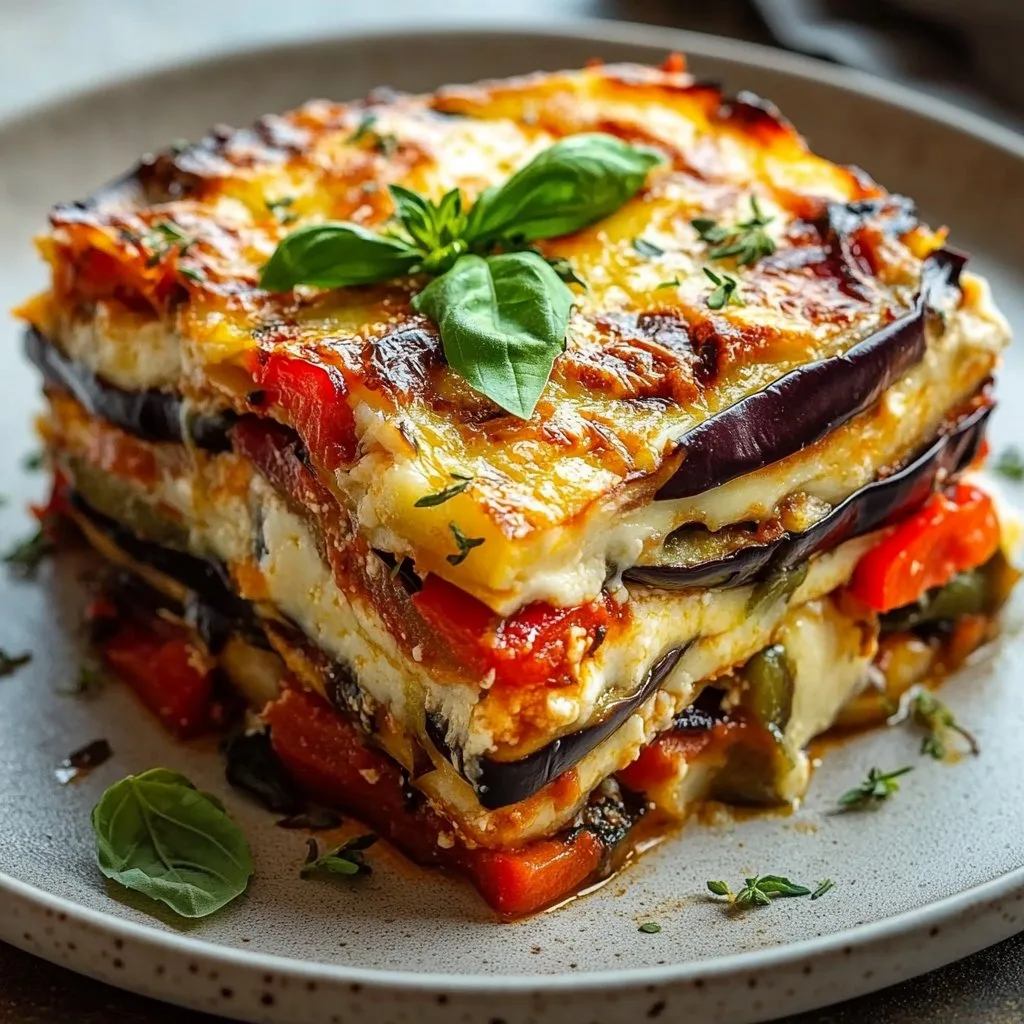
Serve this lasagna simply and without fuss. A wide, shallow platter works well for family-style serving, and a serrated knife helps get neat slices. Let each person choose a small salad or a cup of warm broth to round out the meal.
Pair with a mellow beverage: a gentle red wine, a chilled white, or a pot of black tea all sit comfortably alongside the dish. For a casual evening, a carafe of sparkling water with lemon keeps things bright and fresh. If you want a light finish, a small spoon of yogurt or a slice of citrus can balance the cheese.
This lasagna is suited to many moments. It is a quiet centerpiece for a weeknight supper, a relaxed weekend meal, or a potluck contribution that travels well. If you like to keep a no-fuss desserts list handy for after a filling dinner, remember that simple sweets can follow easily. The same calm approach you use here pairs well with easy dessert recipes or no-fuss desserts that let the meal close gently.
For a balanced menu, consider roasted vegetables and a grain bowl such as the cozy flavors of a winter grain bowl. If you enjoy seasonal bowls, you might find inspiration in a warm, Mediterranean-style quinoa bowl that mirrors some of these flavors. A winter Mediterranean quinoa bowl is a pleasant side note or a versatile option if you want to stretch the meal.
How to Store Layered Mediterranean Vegetable Lasagna with Creamy Ricotta
Refrigeration:
- Cool the lasagna to room temperature first, then cover tightly with foil or an airtight lid.
- Store in the refrigerator for up to 4 days. Flavors meld over this time and the texture becomes a bit more cohesive.
Freezing:
- For longer storage, slice the lasagna into portions and wrap each piece in plastic wrap, then foil.
- Freeze up to 3 months. Thaw overnight in the refrigerator before reheating.
Reheating:
- Reheat single slices in a 350°F oven for about 15 to 20 minutes, covered until warmed through, then uncover to refresh the top.
- For quicker warming, you can use a microwave on medium power, but the oven tends to preserve texture better.
A few reassuring notes: this lasagna holds up well because the ingredients are robust. The roasted vegetables and ricotta maintain structure, and the sauce keeps things moist. If you find the dish a touch dry after refrigeration, add a spoonful of marinara or a splash of olive oil before reheating. Small adjustments restore the gentle balance without fuss.
Marina’s Kitchen Notes
- Pan size matters. A 9×13-inch dish gives even layers and comfortable baking space. If you use a smaller dish, the layers will be thicker and may need extra time to heat through.
- Oven placement. Bake the lasagna on the middle rack so the top browns evenly while the center heats through. If your oven runs hot, tent with foil sooner to avoid an overly dark top.
- Substitutions that keep things simple. Swap fresh basil for dried in the ricotta if that is what you have on hand, but reduce the amount by half since dried herbs are more concentrated. Use a good-quality jarred marinara to save time without compromising flavor.
- Texture fixes. If the ricotta seems too loose, stir in a tablespoon of grated parmesan to firm it slightly. If the vegetables become too soft, roast them a little less next time to hold more bite.
- Timing flexibility. You can roast the vegetables ahead and keep them in the fridge for a day. Assemble shortly before baking for the cleanest textures. The dish is forgiving and often improves with a short rest.
These notes come from years of making similar layered dishes and learning small adjustments that save time and avoid stress. The goal is a pleasant result, not perfection. Keep things simple and trust your senses.
Simple Variations
- Add greens. For a gentle boost, fold chopped spinach into the ricotta before layering. Fresh or thawed, squeezed spinach adds color and a soft, leafy texture.
- Swap cheeses. If you prefer a tangy top, use pecorino in place of some parmesan. For a lighter finish, reduce mozzarella and add a sprinkle of fresh herbs after baking.
- Make it heartier. Add a layer of cooked lentils or thinly sliced mushrooms between the vegetables for more depth and protein. This is an easy way to make the dish feel more filling without changing the rhythm.
- Embrace seasonal veg. In spring, use thin asparagus and early zucchini. In late summer, maximize sweet peppers and ripe eggplant. The lasagna adapts well to what’s fresh.
- Gluten-free option. Use gluten-free lasagna sheets and follow the same steps. The baking time may shift slightly depending on the sheets you choose.
These variations are designed to be small, practical shifts that let you tailor the lasagna to your pantry and the season. They do not complicate the process, and they preserve the calm, steady approach that makes this recipe reliable.
Print
Layered Mediterranean Vegetable Lasagna with Creamy Ricotta
- Prep Time: 30 minutes
- Cook Time: 35 minutes
- Total Time: 65 minutes
- Yield: 6 servings 1x
- Category: Main Course
- Method: Baking
- Cuisine: Italian
- Diet: Vegetarian
Description
A comforting and reliable layered lasagna packed with roasted vegetables, creamy ricotta, and topped with golden mozzarella and parmesan.
Ingredients
- 1 large eggplant, sliced into 1/4-inch rounds
- 2 medium zucchinis, sliced lengthwise into 1/4-inch strips
- 1 red bell pepper, halved and seeded
- 1 yellow bell pepper, halved and seeded
- Olive oil, for brushing
- Salt and pepper, to taste
- 9 lasagna noodles
- 1 cup ricotta cheese
- 1 cup mozzarella cheese, shredded
- 1 cup parmesan cheese, grated
- 2 cloves garlic, minced
- 1 teaspoon dried oregano
- 1 teaspoon dried basil
- 2 cups marinara sauce
- Fresh basil leaves, for garnish
Instructions
- Preheat your oven to 400°F (200°C). Line a baking sheet with parchment paper.
- Arrange the eggplant, zucchini slices, and bell peppers on the prepared baking sheet. Brush with olive oil and season with salt and pepper.
- Roast the vegetables in the oven for about 20 minutes, flipping halfway, until tender and slightly charred.
- While the vegetables are roasting, cook the lasagna noodles according to package instructions. Drain and set aside.
- In a small bowl, mix the ricotta cheese with minced garlic, oregano, basil, salt, and pepper until smooth.
- Spread 1/2 cup of marinara sauce on the bottom of a 9×13-inch baking dish.
- Place three lasagna noodles over the sauce, followed by half of the roasted vegetables. Spread half of the ricotta mixture, then sprinkle with 1/3 of the mozzarella and parmesan cheeses.
- Repeat the layering: 1/2 cup marinara sauce, three lasagna noodles, remaining roasted vegetables, remaining ricotta, and 1/3 of the mozzarella and parmesan.
- Finish with a final layer of noodles, the rest of the marinara sauce, and remaining cheeses. Smooth the top gently.
- Cover with foil and bake for 25 minutes. Remove the foil and bake for an additional 15 minutes until golden and bubbly.
- Let the lasagna rest for at least 10 minutes. Garnish with fresh basil before serving.
Notes
Lasagna can be prepared ahead of time and refrigerated for up to a day before baking. Allows for a more cohesive texture as flavors meld.
Nutrition
- Serving Size: 1 serving
- Calories: 400
- Sugar: 6g
- Sodium: 500mg
- Fat: 15g
- Saturated Fat: 7g
- Unsaturated Fat: 8g
- Trans Fat: 0g
- Carbohydrates: 52g
- Fiber: 4g
- Protein: 20g
- Cholesterol: 40mg
FAQs About Layered Mediterranean Vegetable Lasagna with Creamy Ricotta
Can I make this ahead of time?
Yes. This recipe is forgiving. Assemble and refrigerate the lasagna a few hours or a day ahead, then bake when you are ready. Making it ahead often makes serving easier and lets the flavors settle naturally.
Can I skip the noodles and make a vegetable-only version?
You can. Arrange extra roasted vegetables in layers with ricotta and sauce, then bake. The dish will be shorter and more like a vegetable gratin, but the method remains the same.
Why is my lasagna watery after baking?
If vegetables release too much moisture, let them roast longer to concentrate flavors and remove liquid. Also, avoid over-saucing the layers; use the suggested amounts and allow the dish to rest before slicing so excess juices can be absorbed.
How do I get clean slices for serving?
Let the lasagna rest at least 10 minutes after baking. Use a sharp, long knife and wipe it between slices for neat edges. A serrated knife also helps glide through layered textures.
Can I freeze the assembled lasagna before baking?
Yes. Wrap the unbaked assembled lasagna tightly and freeze up to 3 months. Thaw overnight before baking and add a few extra minutes to the baking time if needed.
These questions come from common, real kitchen moments. The answers are practical and meant to remove doubt so you can cook with confidence and ease.
A Final Thought From My Kitchen
There is a small, quiet satisfaction in watching a lasagna come together. The act of roasting vegetables until they are just tender, stirring a simple herbed ricotta, and layering with care is a slow, steady practice that brings comfort to the table. This Layered Mediterranean Vegetable Lasagna with Creamy Ricotta is not showy. It is honest, reliable, and kind to the cook.
When you serve it, notice the gentle steam rising as it settles, the way the basil scent brightens each forkful, and the ease of a meal that is both simple to make and satisfying to share. This is the kind of recipe that becomes part of a steady rotation: unhurried, nourishing, and quietly lovely.
Conclusion
If you would like a few different vegetarian lasagna perspectives to compare technique or seasoning, this Vegetarian Lasagna Recipe at Love and Lemons offers bright, vegetable-forward ideas that pair well with this approach. For another practical take with clear, approachable steps, see the methodoutlined in Vegetarian Lasagna at RecipeTin Eats.
These resources are helpful if you enjoy exploring small variations or want alternative layering methods. Trust your kitchen rhythm, and remember that steady, thoughtful cooking yields comforting results.