

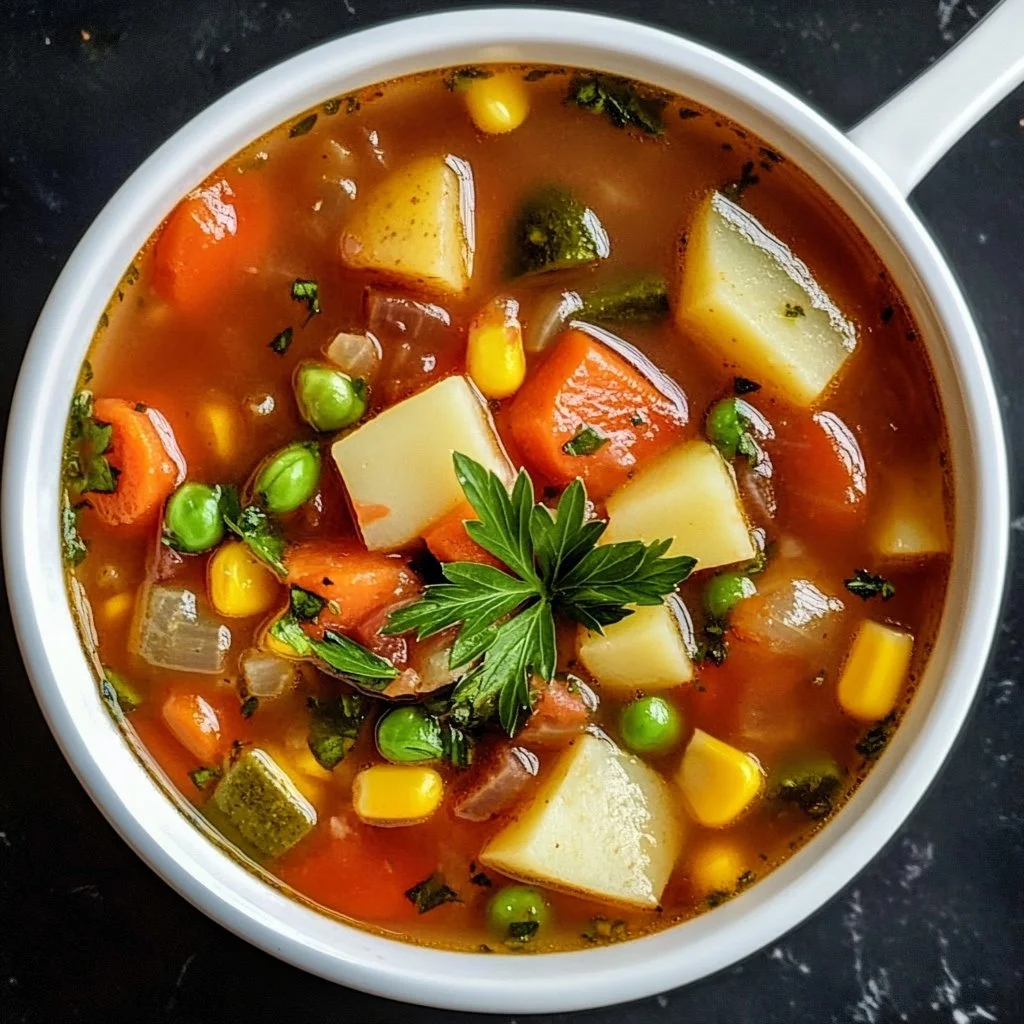
In a quiet kitchen, with a kettle still warm and a wooden spoon waiting, I often reach for something simple and steady like Easy Vegetable Soup. It is the kind of recipe that asks for little and returns calm: a pot on the stove, a rhythm of chopping and stirring, and a gentle simmer that fills the room. I keep a few go-to recipes nearby, the sort that feel like a soft routine on a busy weeknight, such as my notes on an Easy Chicken and Vegetables Skillet, and this soup belongs in that same space of comfort and clarity.
Why Easy Vegetable Soup Works So Well Every Time

Easy Vegetable Soup fits into modern home cooking because it is forgiving and honest. It asks for pantry staples. It asks for a short list of fresh vegetables. It asks for attention, not precision. That makes it a practical recipe for any evening when you want a nourishing meal without extra fuss.
This soup is reliable because the ingredients play clear roles. Onions and carrots build a sweet, savory base. Celery adds a lift. Zucchini and bell pepper bring texture and lightness. Canned tomatoes add body and gentle acidity. The herbs tie everything together in a quiet, composed way.
It supports everyday life because you can adapt it. Swap a vegetable, add a grain, or keep it light for a simple lunch. It holds up well if you make it ahead. It is also a calm place to invite children to help, to teach small kitchen skills, and to enjoy a slow moment of cooking.
Making this soup often teaches small wins. You learn to read the color of softened onion. You learn the sound of a simmering pot. You learn that a simple seasoning adjustment can lift the whole dish. Those are the kinds of things that build confidence in the kitchen.
How to Make Easy Vegetable Soup
“Good recipes should feel calm, not complicated.”
This soup comes together in a few steady steps, and the rhythm is what I find most soothing. Start by building a fragrant base with onion, carrots, and celery. From there, add garlic briefly so it softens but does not burn. Stir in quicker-cooking vegetables like zucchini and bell pepper so they keep shape and texture.
Next, add liquids and herbs, bring the pot to a controlled boil, then lower the heat and let the soup settle into a slow simmer. During that longer rest, flavors marry and the kitchen will smell softly of tomatoes and thyme. Toward the end, add leafy greens so they wilt gently and remain bright.
Before we list the ingredients, picture the movement of this recipe. Listen for a faint sizzle when the oil meets the pan. Watch vegetables lose their raw shine and begin to give way. Feel the confidence that comes from a recipe that does not demand perfection, only a steady hand and a little attention.
Gathering the Ingredients
1 tablespoon olive oil
1 onion, chopped
2 carrots, diced
2 celery stalks, diced
3 garlic cloves, minced
1 zucchini, chopped
1 bell pepper, diced
4 cups vegetable broth
1 can (14.5 oz) diced tomatoes
1 teaspoon dried thyme
1 teaspoon dried basil
Salt and pepper to taste
2 cups spinach or kale
Each ingredient here has a purpose. Olive oil is your initial flavor carrier; it helps soften the aromatics and gives a round mouthfeel. Use a good, fruity olive oil if you have it, but a neutral oil will also do in a pinch.
The onion, carrots, and celery form a classic base. I often keep these three in a jar in the fridge so they are always ready. They give the soup depth and a gentle sweetness that balances the tomatoes.
Garlic is there for a quick lift. Mince it small so it blends into the broth. Zucchini and bell pepper bring texture and color. They cook quickly and help the soup feel fresh.
Vegetable broth is the backbone. Use a broth you enjoy. If you make your own, even better. Canned tomatoes add acidity and body; choose diced tomatoes with their juice for a comfortable texture.
Dried thyme and basil hold up well to simmering. They give a calm herbal note that complements the vegetables without overtaking them. Finish with salt and pepper to taste. Finally, leafy greens like spinach or kale add vitamins and a quiet brightness. Add them late so they stay tender and alive.
Step-by-Step Directions
- In a large pot, heat olive oil over medium heat. Add onion, carrots, and celery, and sauté until softened, about 5 minutes.
Listen for a gentle sizzle as the oil warms. The onion becomes translucent and the carrot edges loosen slightly. This is the first, quiet signal that the dish is coming together. - Add garlic and sauté for an additional minute.
Keep the heat moderate so the garlic softens rather than browns. The scent will lift subtly in the room. This minute of gentle stirring builds a fragrant, rounded base. - Stir in zucchini and bell pepper, cooking for another 3-4 minutes.
These vegetables should soften but remain slightly firm. You want a pleasant bite, not a mush. Watch as the zucchini loses a little of its raw sheen and the bell pepper’s edges relax. - Pour in the vegetable broth and add the diced tomatoes, thyme, basil, salt, and pepper.
Bring the liquid up just enough to cover the vegetables. Stir once to distribute flavors. The broth should look clear and warm, with tiny movements on the surface. - Bring to a boil, then reduce heat and let simmer for 20-25 minutes.
Once the pot reaches a boil, lower the heat so it keeps a steady, gentle simmer. During this time, flavors knit together and the vegetables soften further. The surface may show a few small bubbles and a calm shimmer. - Add the spinach or kale and cook until wilted, about 3-5 minutes.
Tuck the greens in and watch them fold into the hot broth. Spinach will collapse quickly; kale may take a touch longer to become tender. The color will deepen and feel comforting and fresh. - Serve warm.
Ladle into bowls and pause to enjoy the small, quiet satisfaction of a pot that did its work. The soup should sit ready, steaming gently, with clear vegetable pieces and a broth that tastes like home.
Note sensory cues as you go. The idea of batter thickening or edges setting is more at home in baking, yet similar cues exist here. Notice when the onion edges set into a softened translucence. Notice when the top surface of the broth moves from raw to gently glossy. Allow the soup to cool a little before serving so the flavors settle and you can taste seasonings with calm attention.
Bringing Easy Vegetable Soup to the Table
Serve this soup in a relaxed way. Use the bowl that feels familiar. A slice of crusty bread or a plain buttered roll pairs naturally. Keep garnishes simple: a drizzle of olive oil, a grind of black pepper, maybe a few torn basil leaves.
This soup works for many meal moments. It is a quiet dinner for two. It is a light meal for one with a book. It is also friendly company at a casual gathering. A simple pot on the stove invites people to come, ladle their own bowl, and savor something nourishing without ceremony.
Pairing is easy. A mild cheese on the side, a small salad, or a cup of tea makes the meal feel complete. If you like a heartier plate, add cooked beans or a scoop of rice to the bowl before ladling the soup over. The idea is to keep the table relaxed and approachable.
Serving is about presence more than perfection. Set a cloth napkin, offer a spoon, and give yourself a moment to breathe before sitting. The subtle smells and warm bowl give a small, grounding pleasure.
Saving Some for Later
Soups like this one store very well. Cool the soup at room temperature for up to an hour, then transfer to airtight containers. Refrigerate for up to four days. Reheat gently on the stove over medium-low heat until warmed through.
To freeze, leave out the greens and add them at reheating time for best texture. Freeze the soup in containers with a bit of headroom, or use freezer bags laid flat. Keep frozen for up to three months. Thaw overnight in the fridge before reheating.
When reheating from chilled or frozen, bring the soup to a gentle simmer rather than a rolling boil. This keeps the vegetables tender and the broth clear. Taste and refresh the seasoning with salt and pepper afterward. A squeeze of lemon or a splash of good olive oil can brighten the reheated soup.
Making a larger batch is often helpful. Leftovers make lunch simple and satisfying. A pot of soup becomes a calm kitchen resource you can rely on for an easy, good meal.
In case you seek inspiration for pairing this soup with other, slightly richer dishes, I sometimes place a heartier recipe nearby for a different night, such as a soothing Classic Ginger Garlic Chicken Noodle Soup. That kind of planning keeps weeknight meals fresh without extra effort.
Small Tips That Make Cooking Easier
- Pan size matters. Use a wide, heavy-bottomed pot for even heat and comfortable stirring. It gives space for small movements and avoids crowding the vegetables.
- Oven placement is not relevant here, but stove heat control is. Keep a low, steady simmer once you reduce the heat. A rolling boil will overcook vegetables and cloud the broth.
- Substitutions are okay. Swap zucchini for summer squash, or bell pepper for a small cup of diced tomato if you prefer. Beans or small pasta can make the soup more filling.
- Texture fixes can be simple. If the soup feels thin, add a mashed potato or a few tablespoons of cooked rice to thicken slightly. If it feels too thick, add a splash of broth or water.
- Timing flexibility is a gift. If you need the soup on a slow timetable, simmer gently for longer. Flavors deepen over time without much maintenance from you.
Each tip is meant to be adaptable. The goal is to keep you calm and in control, not to add another set of rules.
Simple Variations
- Mediterranean Twist: Add a splash of lemon juice and a handful of chopped fresh parsley at the end. Swap basil for oregano. This brightens the soup with citrus notes.
- Hearty Bean Addition: Stir in a can of rinsed cannellini or chickpeas during the last 10 minutes. The beans make the soup more filling and add a creamy texture.
- Grain-Forward Version: Add cooked barley, farro, or small pasta during the last five minutes. They soak up the broth and make the bowl heartier.
- Spicy Comfort: Add a pinch of red pepper flakes when you add the broth to provide a gentle heat that warms the palate. Keep it modest so the soup remains soothing.
- Seasonal Swaps: In winter, add diced root vegetables like parsnip or turnip. In summer, use fresh tomatoes and a touch less broth for a lighter feel.
Each variation keeps the core of the recipe intact. They allow you to adapt based on what you have on hand or the mood you bring to the kitchen. Keep things simple and choose one or two small changes rather than a long list.
Print
Easy Vegetable Soup
- Prep Time: 10 minutes
- Cook Time: 30 minutes
- Total Time: 40 minutes
- Yield: 4 servings 1x
- Category: Soup
- Method: Stovetop
- Cuisine: Vegetarian
- Diet: Vegan
Description
A nourishing and comforting vegetable soup that brings calm to your kitchen with its forgiving and adaptable ingredients.
Ingredients
- 1 tablespoon olive oil
- 1 onion, chopped
- 2 carrots, diced
- 2 celery stalks, diced
- 3 garlic cloves, minced
- 1 zucchini, chopped
- 1 bell pepper, diced
- 4 cups vegetable broth
- 1 can (14.5 oz) diced tomatoes
- 1 teaspoon dried thyme
- 1 teaspoon dried basil
- Salt and pepper to taste
- 2 cups spinach or kale
Instructions
- In a large pot, heat olive oil over medium heat. Add onion, carrots, and celery, and sauté until softened, about 5 minutes.
- Add garlic and sauté for an additional minute.
- Stir in zucchini and bell pepper, cooking for another 3-4 minutes.
- Pour in the vegetable broth and add the diced tomatoes, thyme, basil, salt, and pepper.
- Bring to a boil, then reduce heat and let simmer for 20-25 minutes.
- Add the spinach or kale and cook until wilted, about 3-5 minutes.
- Serve warm.
Notes
For best texture, add greens toward the end of cooking. Soups store well; refrigerate for up to four days or freeze for up to three months.
Nutrition
- Serving Size: 1 serving
- Calories: 250
- Sugar: 6g
- Sodium: 400mg
- Fat: 8g
- Saturated Fat: 1g
- Unsaturated Fat: 5g
- Trans Fat: 0g
- Carbohydrates: 37g
- Fiber: 7g
- Protein: 7g
- Cholesterol: 0mg
FAQs About Easy Vegetable Soup
Can I make this ahead of time?
Yes. This recipe is forgiving. Making it ahead often makes serving easier and lets the flavors settle naturally. Reheat slowly and add fresh greens at the end.
Can I use dried herbs instead of fresh?
Dried herbs work well in this recipe. Use about one third of the amount of dried herbs if a recipe calls for fresh. The recipe already lists dried thyme and basil, which stand up well to simmering.
My soup tastes a bit flat. What should I do?
Taste and correct with salt first. If it still needs brightness, a splash of lemon juice or a drizzle of good olive oil can lift the flavors. A small pinch of sugar sometimes balances acidic tomatoes.
Can I add meat or animal stock?
Yes. If you prefer, use chicken or beef broth instead of vegetable broth. Add cooked, diced chicken or sliced sausage at the end for a heartier bowl.
How do I keep the greens from turning mushy?
Add greens during the last few minutes and cook just until wilted. Spinach wilts faster than kale. Remove from heat promptly to maintain bright color and tender texture.
A Final Thought From My Kitchen
This soup is a small, steady practice in calm cooking. It is not about getting everything perfect. It is about showing up, doing a few simple things well, and letting the pot do its work. There is a quiet reward in that process.
I encourage you to make this recipe your own. Start with the list here, then tune it to your pantry and taste. Notice how the kitchen feels as you cook. Let the little wins build your confidence. A well-made soup can feel like a gentle lighthouse in a busy week.
Conclusion
A clear, reliable reference can be reassuring when you want to try something new or return to a favorite. For a slightly different take and extra tips, you might also find this Easy Vegetable Soup Recipe – NatashasKitchen.com helpful as a companion resource.
